CNC Ball Screw Pakistan: How to Choose the Right Size and Lead for Your Machine
The ball screw is what converts a servo or stepper motor’s rotational motion into precise linear movement along a CNC machine’s axis. Choosing the wrong size or lead can result in poor accuracy, excessive backlash, or premature wear. Here’s how to choose correctly.
What Is a CNC Ball Screw?
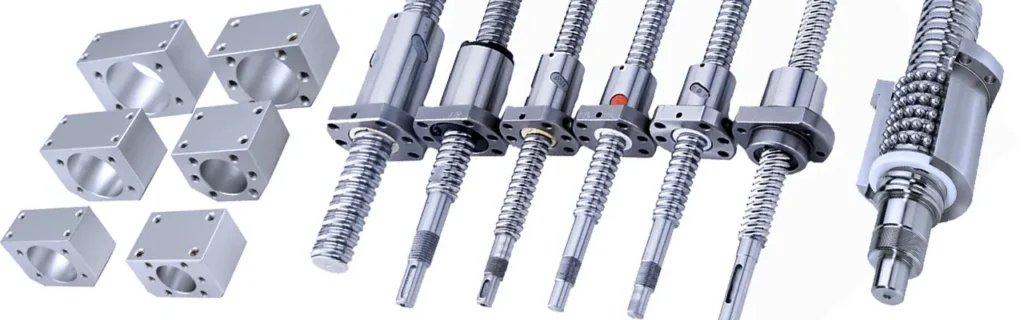
A ball screw consists of a threaded shaft and a ball nut containing recirculating ball bearings, which roll along the screw’s threads rather than sliding — dramatically reducing friction compared to traditional lead screws. This makes ball screws the standard choice for CNC machines requiring high precision and repeatability.
Key Specifications to Understand
Diameter
Common CNC ball screw diameters include 16mm, 20mm, and 25mm. Larger diameters generally offer higher load capacity and rigidity, suited to heavier machines or longer axis lengths.
Lead (Pitch)
The lead determines how far the nut travels per full rotation of the screw — for example, a 5mm lead moves the nut 5mm per revolution. A shorter lead offers finer resolution but slower travel speed; a longer lead moves faster but with less fine control.
Length
Ball screw length must match your machine’s axis travel distance, with appropriate allowance for mounting brackets (BK-BF style end supports) at both ends.
Matching Ball Screw to Your Machine
Small CNC routers and light-duty machines: 16mm diameter with 5mm lead is common
Medium CNC mills and routers: 20mm diameter, balancing speed and rigidity
Larger or heavier-duty machines: 25mm diameter or higher for greater load capacity
What to Check Before Buying
End support compatibility — confirm you have matching BK (fixed) and BF (support) bearing blocks for your screw diameter
Straightness and precision grade — higher precision grades reduce backlash and improve repeatability
Nut type — flanged vs. cylindrical nuts affect how the assembly mounts to your machine’s carriage
Anti-backlash options — important for applications requiring high positional accuracy, like engraving or fine detail cutting
Final Thoughts
Selecting the right ball screw diameter, lead, and length for your CNC machine directly affects both accuracy and speed. When in doubt, match your ball screw to your existing motor’s torque and speed characteristics — or consult a supplier who can confirm the right combination for your specific build.