Introduction
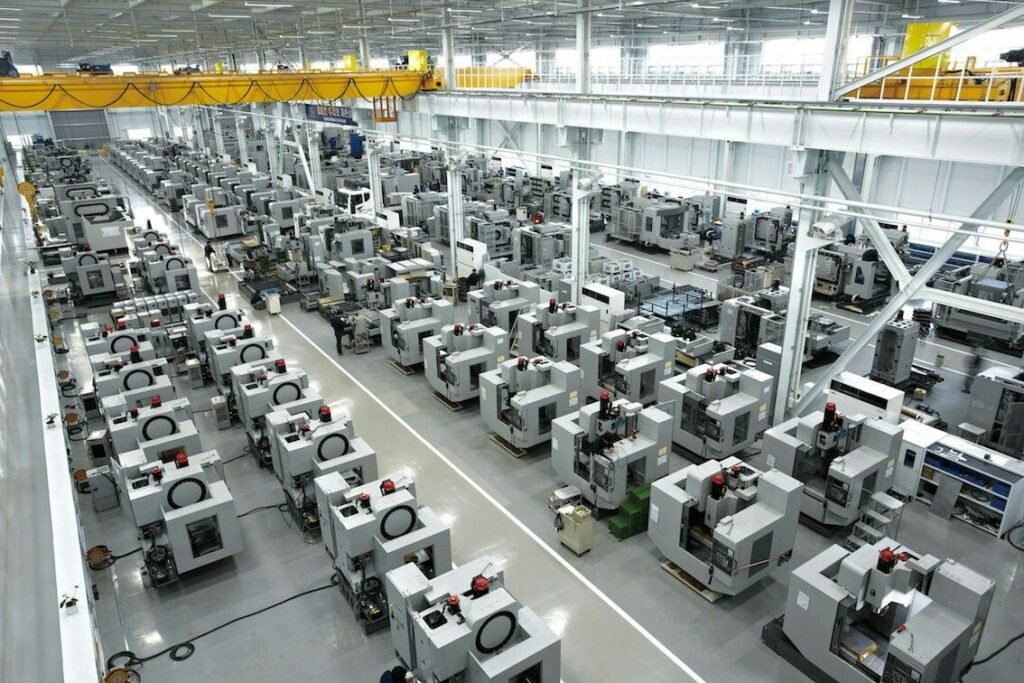
CNC automation is a manufacturing technology that uses computer-controlled systems to operate machining equipment with minimal manual involvement. It combines computer numerical control, mechanical systems, software programming, and automation components to produce accurate and consistent parts.
Modern industries depend on CNC automation to manufacture complex components faster and with higher precision. From automotive parts and aerospace components to medical devices and industrial equipment, CNC automated systems help businesses improve production efficiency while maintaining strict quality standards.
What Is CNC Automation?
CNC automation means using computer-controlled machines to perform manufacturing operations automatically. CNC stands for Computer Numerical Control, which refers to the technology that controls machine movements through programmed commands.
A CNC automated system receives instructions from a computer program and converts them into precise mechanical movements. These instructions control different aspects of machining, including tool position, cutting speed, spindle rotation, and movement along different axes.
In a traditional machining environment, an operator manually adjusts machine settings and controls the cutting process. CNC automation replaces many manual operations with programmed control, allowing machines to produce identical parts repeatedly.
A CNC automation system can perform tasks such as:
- Cutting metal, plastic, and other materials
- Drilling precise holes
- Milling complex shapes
- Turning cylindrical components
- Engraving patterns and designs
- Changing tools automatically
- Inspecting finished components
The main objective of CNC automation is to create a reliable manufacturing process that improves speed, accuracy, and production capacity.
How Does CNC Automation Work?
CNC automation works through several connected stages. Each stage plays an important role in transforming a digital design into a finished physical product.
The process involves design software, programming systems, CNC controllers, motors, sensors, and mechanical components.
1. Product Design Using CAD Software
The CNC automation process starts with creating a digital model of the required component.
Engineers use CAD (Computer-Aided Design) software to design parts with exact measurements and specifications. The CAD model contains information about the shape, dimensions, holes, curves, and features of the final product.
Common CAD software used in CNC manufacturing includes:
- AutoCAD
- SolidWorks
- Fusion 360
- CATIA
- Siemens NX
The CAD design acts as the foundation for the entire manufacturing process.
2. Converting Design Into CNC Program
After the design is completed, it moves to CAM (Computer-Aided Manufacturing) software.
CAM software analyzes the design and creates machining instructions. These instructions define how the CNC machine should manufacture the part.
The CAM system determines:
- Cutting paths
- Tool selection
- Cutting speed
- Feed rate
- Machining sequence
- Material removal process
The final program is converted into machine-readable code.
The two main CNC programming languages are:
G-Code
G-code controls machine movement.
Examples include:
- Movement direction
- Positioning
- Cutting paths
- Machine speed
M-Code
M-code controls machine functions.
Examples include:
- Starting and stopping spindle motors
- Activating coolant systems
- Changing tools
3. CNC Controller Processes Instructions
The CNC controller is the main control unit of the machine.
It receives the programmed instructions and converts them into signals that control machine components.
The CNC controller manages:
- Machine axis movement
- Motor speed
- Tool position
- Spindle operation
- Safety functions
It ensures that every movement follows the programmed design accurately.
Popular CNC controller manufacturers include:
- Fanuc
- Siemens
- Mitsubishi
- Haas
Advanced controllers can also collect machine data, monitor performance, and improve machining efficiency.
4. Machine Performs Automated Operations
Once the CNC controller processes the program, the machine starts the manufacturing operation.
The cutting tools move according to programmed instructions and remove material to create the required component.
Depending on the machine type, CNC automation can perform:
- Milling
- Turning
- Drilling
- Grinding
- Cutting
- Engraving
Modern CNC systems can complete multiple operations without requiring manual adjustments.
Main Components of CNC Automation
A CNC automation system depends on several hardware and software components working together.
Servo Motors
Servo motors provide accurate movement control in CNC machines.
They control the movement of machine axes such as:
- X-axis
- Y-axis
- Z-axis
Servo motors are widely used in industrial CNC systems because they provide:
- High precision
- Fast response
- Strong torque control
- Position feedback
They are commonly used in CNC milling machines, CNC lathes, and industrial automation systems.
Servo Drives
Servo drives control the operation of servo motors.
They receive signals from the CNC controller and regulate:
- Motor speed
- Position accuracy
- Torque output
A complete servo system includes:
- Servo motor
- Servo drive
- Encoder
The encoder provides feedback to maintain accurate machine movement.
Stepper Motors
Stepper motors are another type of motor used in CNC machines.
They move in fixed steps, allowing controlled movement without complex feedback systems.
Stepper motors are commonly used in:
- CNC routers
- Small CNC machines
- Desktop CNC equipment
They are affordable and suitable for applications that do not require extremely high accuracy.
Spindle System
The spindle system is responsible for rotating cutting tools.
The spindle performance affects:
- Cutting speed
- Surface finish
- Manufacturing quality
A CNC spindle system includes:
- Spindle motor
- Drive system
- Bearings
- Cooling system
Different applications require different spindle speeds and power levels.
Sensors and Feedback Systems
Sensors improve CNC automation accuracy and reliability.
They collect information about machine conditions and provide feedback to the controller.
Sensors help monitor:
- Position accuracy
- Temperature
- Tool condition
- Machine movement
Feedback systems allow CNC machines to correct errors and maintain consistent performance.
Types of CNC Automation
Basic CNC Automation
Basic automation includes built-in machine features that reduce manual work.
Examples include:
- Automatic tool changers
- Programmable machining cycles
- Automatic coolant control
- Automatic positioning
This type of automation is common in many CNC machines.
Robotic CNC Automation
Robotic CNC automation uses industrial robots to perform repetitive tasks.
Robots can handle:
- Loading raw materials
- Removing finished parts
- Moving components
- Performing inspections
Robotic integration increases production efficiency and reduces operator involvement.
Fully Automated CNC Manufacturing
Fully automated systems combine:
- CNC machines
- Robots
- Sensors
- Software systems
- Production monitoring tools
These systems can operate continuously and are commonly used in large manufacturing facilities.
Benefits of CNC Automation
Increased Production Speed
CNC automation allows machines to operate continuously with fewer interruptions. This increases production output and reduces manufacturing time.
Higher Accuracy
Computer-controlled systems produce highly precise components with consistent dimensions.
Reduced Human Errors
Automation reduces mistakes caused by manual operation and improves product consistency.
Lower Production Waste
Precise machining reduces material waste and improves resource efficiency.
Improved Safety
Automation reduces direct human interaction with cutting tools and moving machine parts.
Applications of CNC Automation
Automotive Manufacturing
Automotive companies use CNC automation to produce:
- Engine parts
- Transmission components
- Vehicle components
Aerospace Manufacturing
Aerospace industries require extreme precision. CNC automation helps manufacture aircraft components with strict quality requirements.
Medical Manufacturing
CNC automation is used to create:
- Surgical tools
- Medical implants
- Precision equipment
Electronics Manufacturing
Electronic industries use CNC machines for manufacturing small and accurate components.
Woodworking Industry
CNC routers automate:
- Furniture production
- Wood cutting
- Decorative engraving
Future of CNC Automation
CNC automation is moving toward smarter and more connected manufacturing systems.
Future developments include:
- Artificial intelligence integration
- Predictive maintenance
- IoT-based monitoring
- Smart factories
- Advanced robotics
Manufacturers are adopting intelligent CNC systems that can analyze data, optimize production, and reduce machine downtime.
Conclusion
CNC automation has transformed modern manufacturing by combining computer technology, mechanical engineering, and automated control systems. It allows industries to produce accurate, consistent, and complex components with improved efficiency.
The process begins with digital design, continues through CNC programming and machine control, and ends with automated production. Components such as CNC controllers, servo motors, drives, spindles, and sensors work together to create a complete automated manufacturing system.
As industries continue moving toward smart manufacturing and Industry 4.0, CNC automation will remain one of the most important technologies shaping the future of production.
One Response