Choosing the right servo motor can make or break the performance of a CNC machine. Too small, and you’ll struggle with torque and accuracy. Too large, and you’re paying for capacity you’ll never use. Here’s a practical framework for selecting a servo motor in Pakistan, based on real workshop requirements.
Step 1: Understand Your Load Requirements
Before comparing brands or specs, figure out what the motor actually needs to move. Consider:
- Weight of the moving axis (table, spindle head, gantry)
- Required speed for your cutting or forming process
- Torque needed to overcome friction and cutting resistance
Underestimating load requirements is the most common mistake — it leads to overheating, missed steps, and premature motor failure.
Step 2: Match Power Rating to Machine Size
Servo motors typically range from 100W for small pick-and-place applications up to several kW for heavy industrial equipment. For most small-to-medium CNC routers and mills used in Pakistani workshops, motors in the 400W–1.5kW range cover the majority of use cases.
Step 3: Compare Brands
Several servo motor brands are widely available and trusted in Pakistan:
- Yaskawa — known for reliability and strong support documentation
- Mitsubishi — a common choice for industrial-grade CNC setups
- Panasonic (Minas series) — solid mid-range option with good accuracy
- Delta — cost-effective and widely used in textile machinery
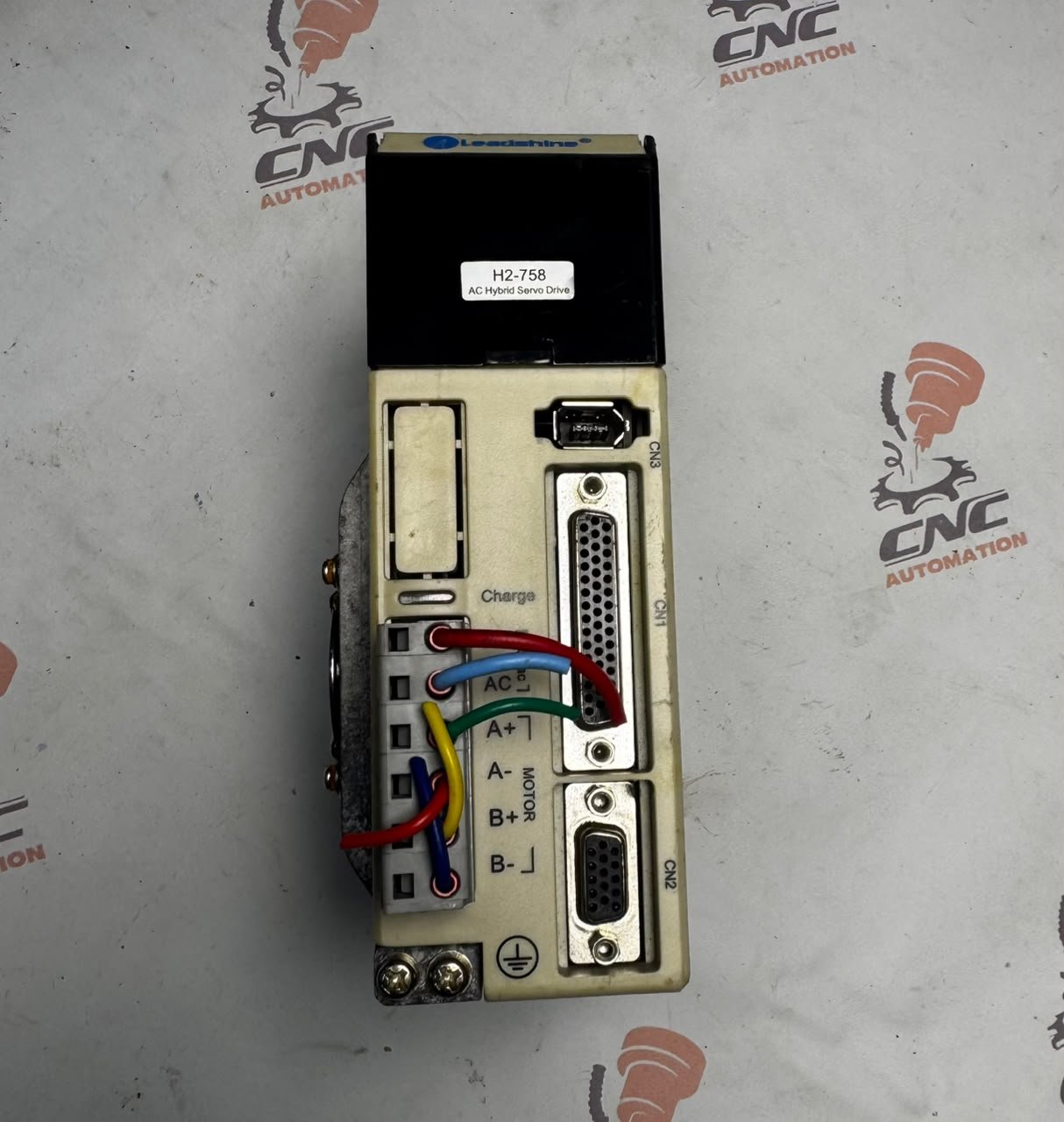
- Leadshine — popular for hybrid servo systems and smaller workshops
Each brand has trade-offs in price, encoder resolution, and driver compatibility, so it’s worth confirming your driver and motor are matched before purchasing.
Step 4: Check Encoder Type and Feedback Resolution
The encoder is what gives a servo motor its precision advantage over stepper motors. Higher-resolution encoders (17-bit, 20-bit, etc.) allow finer positional accuracy — important for detailed cutting or engraving work.
Step 5: Buy From a Supplier Who Understands Integration
A servo motor is only as good as its setup. Wiring, driver tuning, and PLC integration all affect real-world performance. Working with a supplier who can walk you through configuration — not just sell you a box — saves significant troubleshooting time down the line.
Final Thoughts
Picking the right servo motor comes down to matching load, power, and precision needs to your specific machine — not just choosing the most popular brand. If you’re unsure what fits your setup, it’s worth getting technical guidance before you buy rather than after.
In the next posts, we’ll cover PLC and HMI selection for industrial automation projects in Pakistan.