How CNC Machines Work Step by Step: Complete Manufacturing Process Guide
Introduction
CNC machines have changed modern manufacturing by improving accuracy, speed, and production consistency. CNC stands for Computer Numerical Control, a technology that allows machines to perform machining operations through programmed computer instructions.
Traditional machining depends heavily on manual control, while CNC machines use digital programs to control cutting tools, machine movements, and production operations. Industries such as aerospace, automotive, medical equipment, electronics, and precision engineering use CNC machines to manufacture complex components with high accuracy.
Understanding how CNC machines work step by step helps manufacturers, engineers, and beginners understand why CNC technology has become essential in modern production.
What Is a CNC Machine?
A CNC machine is a computer-controlled manufacturing system that removes material from a workpiece to create a specific shape or design. The machine follows programmed instructions created from digital design files.
A CNC system includes several important components:
The CNC controller acts as the brain of the machine. It reads the program instructions and controls every movement required to complete the machining process.
Step 1: Creating the Digital Design
The CNC machining process starts with creating a digital model of the required component.
Engineers usually create designs using CAD (Computer-Aided Design) software. CAD software allows designers to create accurate 2D drawings or 3D models with exact dimensions and specifications.
The design includes important details such as:
Part dimensions
Material requirements
Hole locations
Surface finishes
Manufacturing tolerances
The CAD model provides the foundation for the entire CNC machining process.
Step 2: Converting CAD Design into CNC Program
A CAD design cannot directly control a CNC machine. The design must be converted into machine-readable instructions.
CAM (Computer-Aided Manufacturing) software is used for this conversion. The CAM system analyzes the design and creates machining paths for cutting tools.
The software determines:
Tool movement direction
Cutting speed
Feed rate
Tool selection
Machining sequence
The final program is usually converted into G-code, which is the language understood by CNC machines.
G-code contains commands that control machine actions such as:
Moving the cutting tool
Starting and stopping the spindle
Changing tools
Adjusting cutting positions
Step 3: Preparing the CNC Machine
Before production begins, the CNC machine must be properly prepared.
The operator installs the required cutting tools and secures the workpiece using fixtures or clamps. Proper positioning is important because incorrect setup can affect accuracy.
Machine preparation includes:
Installing cutting tools
Loading CNC program
Setting work coordinates
Checking tool positions
Selecting machining parameters
The operator also verifies that the machine settings match the material and design requirements.
Step 4: Loading the Workpiece
The raw material is placed securely inside the CNC machine.
Different industries use various materials, including:
Aluminum
Steel
Stainless steel
Titanium
Plastics
Brass
The workpiece must remain stable during machining because movement can create inaccurate dimensions or damage the final component.
CNC machines use different holding systems depending on the application. Common methods include vises, chucks, clamps, and automated fixtures.
Step 5: CNC Machine Executes Program Instructions
Once the program is loaded and the setup is complete, the CNC controller begins executing the instructions.
The controller sends signals to motors that control machine movements along different axes.
Common CNC machine axes include:
X-axis movement
Y-axis movement
Z-axis movement
Advanced CNC machines may include additional rotational axes for producing complex shapes.
The spindle rotates the cutting tool at a programmed speed. The tool removes material from the workpiece according to the programmed tool path.
Step 6: Material Removal Process
The cutting process is the main stage where the raw material becomes a finished component.
The CNC machine controls:
Cutting depth
Tool movement
Spindle speed
Feed rate
Different cutting tools perform different operations, including:
Milling
Drilling
Turning
Grinding
Boring
The machine repeats programmed movements until the required shape and dimensions are achieved.
Step 7: Tool Changes During Machining
Many CNC machines include automatic tool changers that improve production efficiency.
A single component may require multiple tools for different operations. For example, one tool may create holes while another tool performs surface finishing.
Automatic tool changers allow the machine to switch tools without manual replacement.
This reduces downtime and improves production speed.
Step 8: Quality Inspection of Finished Parts
After machining is completed, the finished component is inspected to confirm that it meets design specifications.
Quality checks may include:
Dimensional measurement
Surface finish inspection
Tolerance verification
Visual examination
Advanced CNC systems may use automated inspection equipment and sensors to monitor quality during production.
Accurate inspection ensures that manufactured parts perform correctly in their final applications.
Types of CNC Machines
Different CNC machines are designed for specific manufacturing requirements.
CNC Milling Machines
CNC milling machines use rotating cutting tools to remove material from stationary workpieces. They are commonly used for producing complex shapes, slots, and precision surfaces.
CNC Turning Machines
CNC turning machines rotate the workpiece while cutting tools remove material. They are mainly used for producing cylindrical components.
CNC Routers
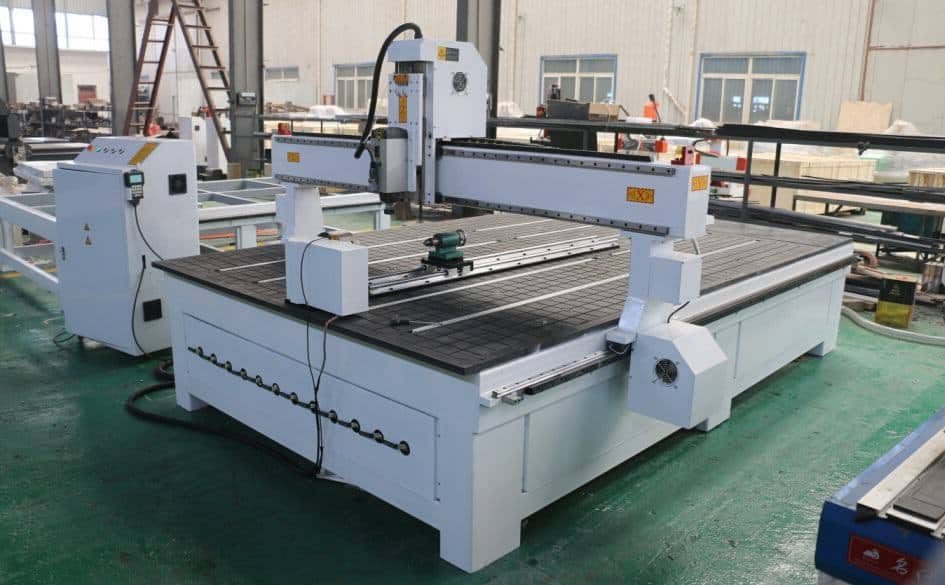
CNC routers are commonly used for cutting wood, plastics, composites, and lightweight materials.
CNC Grinding Machines
CNC grinding machines provide extremely accurate surface finishing for precision components.
Advantages of CNC Machines
CNC machines provide several benefits for modern manufacturing.
High Accuracy
Computer-controlled movements allow CNC machines to produce parts with very tight tolerances.
Consistent Production
A programmed CNC machine can manufacture identical parts repeatedly with minimal variation.
Faster Manufacturing
Automation reduces manual operations and improves production speed.
Complex Design Capability
CNC machines can manufacture detailed components that are difficult to produce manually.
Reduced Human Error
Digital programming reduces mistakes caused by manual operation.
CNC Machines and Modern Manufacturing
CNC technology continues to evolve with advanced automation, robotics, and smart manufacturing systems.
Modern CNC machines can connect with factory software, collect production data, and support predictive maintenance. These improvements help manufacturers increase efficiency and reduce production costs.
Industries are combining CNC machining with artificial intelligence, sensors, and automation to create smarter manufacturing environments.
Conclusion
CNC machines work through a structured process that begins with digital design creation and ends with precise manufacturing of finished components. CAD software creates the design, CAM software generates machining instructions, and the CNC controller manages machine operations.
The step-by-step CNC machining process allows manufacturers to produce accurate, repeatable, and complex parts efficiently. With continued development in automation and smart manufacturing, CNC technology will remain a major part of modern industrial production.
2 Responses