CNC (Computer Numerical Control) machines have revolutionized manufacturing by automating precision tasks that once relied heavily on manual labor. From cutting metal to shaping plastic and engraving intricate designs, CNC technology powers a wide range of industries, including automotive, aerospace, woodworking, and jewelry making. However, not all CNC machines are the same — each type is designed for specific applications, materials, and levels of precision. This guide explores the most common types of CNC machines, how they work, and which industries rely on them most.
What Makes CNC Machines Different From One Another?
While all CNC machines share the same core principle — using computer-programmed instructions to control movement — they differ significantly in function, tooling, and mechanical design. These differences determine which machine is best suited for tasks like cutting, drilling, engraving, or shaping different materials such as metal, wood, or plastic.
Key Factors That Distinguish CNC Machine Types
Tooling method – rotary cutting tools, lasers, plasma, or water jets
Axis configuration – ranging from basic 3-axis to advanced 5-axis systems
Material compatibility – metal, wood, plastic, composites, or fabric
Precision level – required for industries like aerospace versus general fabrication
CNC Milling Machines
CNC millingmachines are among the most widely used CNC systems, employing rotary cutting tools to remove material from a workpiece. They are highly versatile and capable of producing complex shapes, slots, and holes with excellent precision.
Vertical Milling Machines
In vertical milling machines, the spindle axis is oriented vertically, making them ideal for drilling and precision detail work. They are commonly used in smaller workshops due to their compact footprint.
Horizontal Milling Machines
Horizontal milling machines position the spindle horizontally, allowing for faster material removal and making them well-suited for heavy-duty industrial applications, particularly with large or dense metal parts.
CNC Lathes (Turning Machines)
CNC lathes, also known as turning machines, rotate the workpiece against a stationary cutting tool. This process is ideal for creating cylindrical parts such as shafts, bushings, and fittings.
Applications of CNC Lathes
CNC lathes are widely used in automotive, aerospace, and general manufacturing industries for producing round or symmetrical components with high accuracy and repeatability.
Multi-Axis CNC Lathes
Advanced CNC lathes incorporate multiple axes, allowing simultaneous turning and milling operations. This reduces the need for repositioning the workpiece and increases production efficiency.
CNC Router Machines
CNC routers are commonly used for cutting, carving, and engraving softer materials such as wood, plastic, foam, and composites. They are popular in furniture making, sign production, and cabinetry.
How CNC Routers Differ From CNC Mills
While similar in operation to milling machines, CNC routers typically operate at higher speeds and are optimized for cutting softer materials rather than dense metals.
Common Industries Using CNC Routers
Furniture manufacturers, sign makers, and hobbyists frequently use CNC routers due to their versatility, ease of use, and ability to handle large sheets of material efficiently.
CNC Plasma Cutting Machines
CNC plasma cutters use a high-velocity jet of ionized gas to cut through electrically conductive materials, primarily metals such as steel, aluminum, and copper.
Advantages of Plasma Cutting
Plasma cutting is known for its speed and cost-effectiveness, particularly for cutting thick metal sheets. It’s widely used in metal fabrication shops, automotive repair, and industrial manufacturing.
Limitations to Consider
While efficient for metal cutting, plasma cutters generally offer less precision compared to laser or water jet systems, making them less ideal for extremely fine detail work.
CNC Laser Cutting Machines
CNC laser cutters use focused laser beams to cut, engrave, or etch materials with exceptional precision. They are highly versatile, capable of working with metals, plastics, wood, and even fabric.
Types of CNC Laser Cutters
CO2 lasers – ideal for non-metal materials like wood, acrylic, and fabric
Fiber lasers – best suited for cutting metals with high speed and precision
Industries That Rely on Laser Cutting
Laser cutting machines are widely used in electronics manufacturing, signage, medical device production, and intricate metal fabrication where precision is critical.
CNC Water Jet Cutting Machines
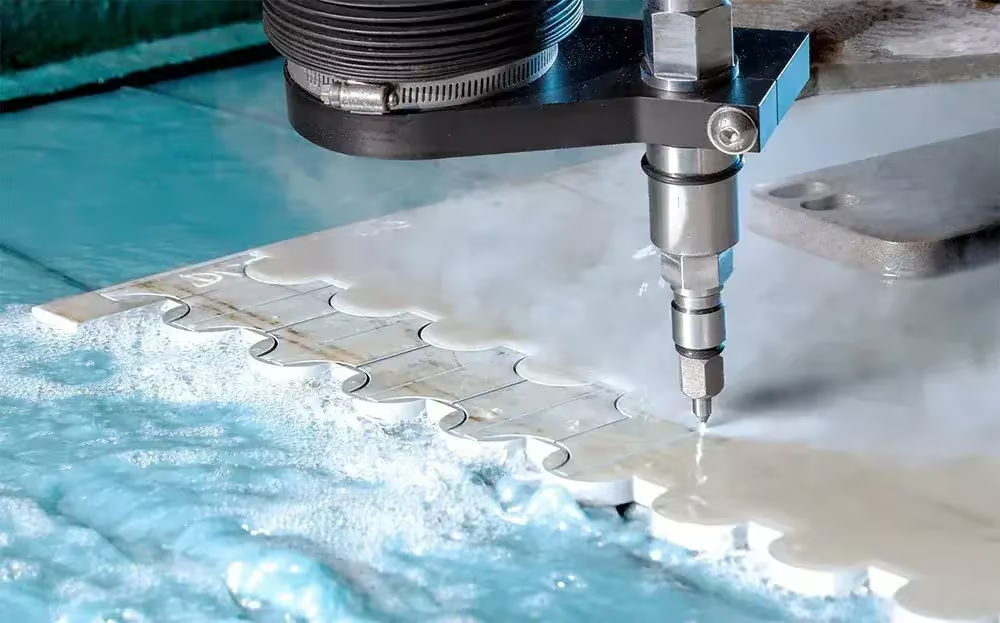
CNC water jet cutters use a high-pressure stream of water, often mixed with abrasive particles, to cut through a wide range of materials without generating heat.
Why Heat-Free Cutting Matters
Because water jet cutting doesn’t produce heat-affected zones, it’s particularly valuable for materials sensitive to thermal distortion, such as certain metals, glass, and composites.
Common Applications
Water jet cutting is frequently used in aerospace, automotive, and architectural industries, especially when cutting thick or heat-sensitive materials.
CNC Plasma vs. Laser vs. Water Jet: Choosing the Right Cutting Method
Selecting between plasma, laser, and water jet cutting depends on factors such as material type, thickness, required precision, and budget. Plasma cutting is often the most economical for thick metals, laser cutting excels in precision work, and water jet cutting is ideal for heat-sensitive or extremely thick materials.
CNC Grinding Machines
CNC grinding machines use an abrasive wheel to remove small amounts of material, achieving extremely fine surface finishes and tight tolerances.
Applications in Precision Manufacturing
These machines are essential in industries requiring high-precision components, such as aerospace, medical devices, and tool and die manufacturing.
CNC Electrical Discharge Machines (EDM)
CNC EDM machines use electrical sparks to erode material from a workpiece, making them ideal for cutting extremely hard metals or intricate shapes that are difficult to achieve through traditional cutting methods.
Types of CNC EDM Machines
Wire EDM – uses a thin wire electrode to cut intricate shapes
Sinker EDM – uses a shaped electrode to create detailed cavities or molds
Industries That Use EDM Technology
CNC EDM machines are commonly used in mold making, aerospace component manufacturing, and medical device production, where precision and material hardness present challenges for conventional machining.
3-Axis vs. 5-Axis CNC Machines
Beyond the type of cutting method, CNC machines are also categorized by the number of axes they operate on, which significantly impacts their capabilities.
3-Axis CNC Machines
These machines move along the X, Y, and Z axes, making them suitable for simpler geometries and standard machining tasks.
5-Axis CNC Machines
5-axis machines add two rotational axes, allowing the cutting tool or workpiece to move at multiple angles simultaneously. This capability enables the production of highly complex parts with fewer setups, improving both accuracy and efficiency.
How to Choose the Right CNC Machine for Your Needs
Consider the Material You’ll Be Working With
Different CNC machines are optimized for specific materials — metals typically require milling, laser, or plasma cutting, while softer materials like wood and plastic are better suited for routers.
Evaluate Precision Requirements
Industries like aerospace and medical device manufacturing often require the tight tolerances offered by grinding, EDM, or 5-axis machining, while general fabrication may only need standard milling or plasma cutting.
Factor in Production Volume
High-volume manufacturing often benefits from multi-axis or automated CNC systems that minimize manual intervention, while smaller shops may find 3-axis machines more cost-effective.
Final Thoughts
Understanding the different types of CNC machines is essential for selecting the right equipment for your specific manufacturing needs. From versatile CNC mills and lathes to specialized laser, plasma, and water jet cutters, each machine type offers unique advantages suited to particular materials, precision requirements, and production goals. By evaluating your material needs, required tolerances, and production volume, you can choose the CNC machine that best aligns with your business objectives and long-term manufacturing success.